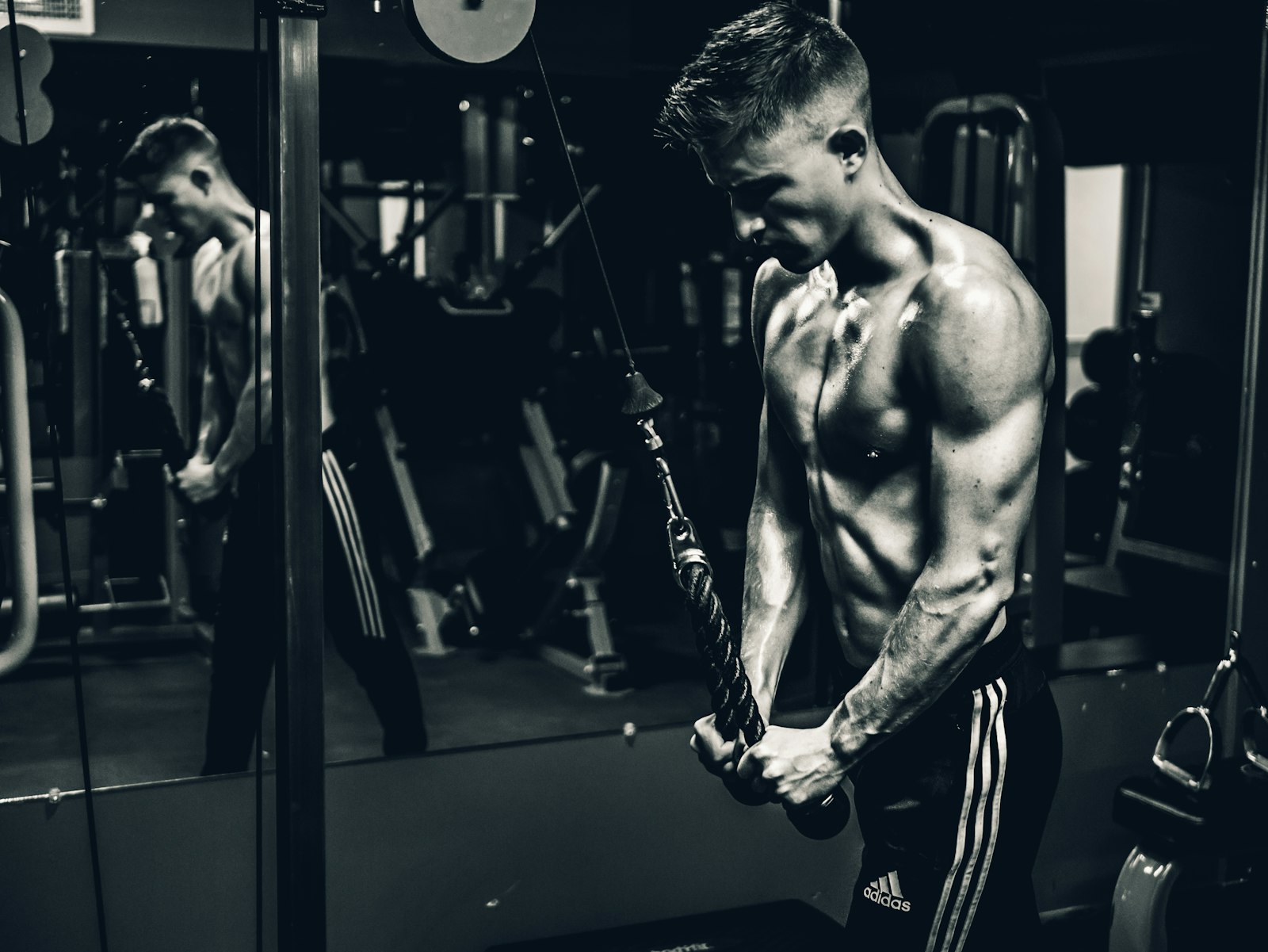
Isometric training — holding a static position under load without movement — is often overlooked in favor of dynamic resistance training. Yet it's a powerful tool for building strength at specific joint angles, overcoming sticking points in lifts, and improving stability. Understanding when and how to use isometrics changes your approach to strength development.
How Isometrics Work
An isometric contraction occurs when a muscle develops tension without changing length. A wall sit, a plank, or holding a heavy deadlift position at knee height are all isometric exercises. Unlike dynamic training (where you move through a range of motion), isometrics train strength at a specific joint angle.
The strength developed is largely angle-specific. If you hold a squat at 90 degrees, you develop the most strength at that angle, with less carryover to 45-degree or fully extended positions. This is both a limitation and a feature: it's a limitation because strength doesn't transfer broadly, but it's a feature because you can target specific weak points.
The Research Evidence
Studies on isometric training show:
- Strength gains: Isometric training produces strength gains comparable to dynamic training at the trained angle. A study comparing isometric holds to dynamic movements showed similar maximum strength development when trained at the same angle.
- Angle specificity: Strength gains are largest at the trained angle and decrease as you move away from it. Training at multiple angles (30, 60, 90 degrees) produces broader strength gains than training at a single angle.
- Muscle activation: Isometric training activates muscle fibers similarly to dynamic training, recruiting high-threshold motor units needed for strength development.
- Time efficiency: Short, maximal isometric holds (6–10 seconds at near-maximal intensity) produce meaningful strength gains with minimal time investment.
- Hypertrophy: Isometric training produces less hypertrophy than dynamic training, partly because the metabolic stress is lower and partly because longer time under tension (which hypertrophy responds well to) is harder to achieve with static holds.
When Isometrics Are Particularly Useful
Sticking points in lifts: If you have a specific joint angle where you're weak in a lift (a bench press that stalls at mid-range, a deadlift that struggles at knee height), isometric holds at that exact angle train strength specifically there. Adding 1–2 isometric sessions per week at the sticking point often improves dynamic performance.
Tendon/joint integrity: Isometric training can be useful when you have joint pain or tendon irritation. By training at a single angle in controlled manner (no moving parts), you reduce injury risk while maintaining stimulus. Once pain resolves, return to dynamic training.
Time-constrained training: Isometric training is time-efficient. 3–5 maximal 6–10 second holds can be done in 2–3 minutes and produce meaningful strength stimulus.
Pain-free range training: If a joint angle is painful, you can train around it using isometrics at safe angles, maintaining strength while avoiding pain.
Grip strength: Isometric grip training (farmer holds, dead hangs, thick-bar holds) is highly effective for grip strength development, which has downstream benefits for overall strength and forearm health.
How to Structure Isometric Training
Maximal strength development: 3–5 sets of 6–10 second near-maximal holds at the target angle. Rest 2–3 minutes between sets to allow CNS recovery. Do this 2–3 times per week.
Multiple-angle training: Hold for 6 seconds at 30% of range, 60% of range, and 90% of range. 2–3 sets per angle, 2× per week. This builds strength across the entire range.
Supplementary to dynamic training: Add 1–2 isometric sessions at sticking points to your existing program. Example: if your bench press stalls at mid-range, add 3 sets of 3–5 second holds at mid-range, 1–2× per week.
Load selection: Use 80–90% of your maximum load at that angle. The holds should feel heavy and challenging.
Practical Examples
Bench press sticking point: Set a rack position at mid-range (about 3 inches from chest). Load a barbell to 80–85% of your 1RM. Hold for 6–8 seconds, rest 3 minutes, repeat 4–5 times. Do this once per week.
Deadlift weak off the floor: Set pins at knee height. Load to 80% of your max deadlift. Deadlift the weight up to the pins, hold there for 6–8 seconds against the pins. Rest 3 minutes, repeat 4–5 times.
Squat depth weakness: Set a box at the depth where you're weakest. Squat down, sit on the box, hold for 6–8 seconds, stand up. Rest 2 minutes, repeat. 3–4 sets.
Grip strength: Farmer walk holds (heavy dumbbells in each hand, stand still). Hold for 30–40 seconds. Rest 1 minute. Repeat 4–5 times, 2–3 times per week.
Core stability: Planks, side planks, or wall sits. 3–4 sets of 30–60 second holds, once or twice per week.
Limitations and Considerations
Limited hypertrophy: Isometric training doesn't produce significant muscle growth. If hypertrophy is a goal, dynamic training is better. Use isometrics as a supplement.
Limited metabolic stress: The metabolic stimulus is lower than dynamic training, so it doesn't produce the "pump" or metabolic fatigue that contributes to growth.
Specificity to angle: Strength doesn't transfer broadly unless you train multiple angles. A single-angle isometric doesn't improve dynamic performance at other ranges as much as dynamic training does.
Valsalva risk: Maximal isometric holds increase intrathoracic pressure. For people with high blood pressure, cardiac conditions, or glaucoma, the Valsalva risk requires caution. Lighter holds with breathing, or medical clearance, may be needed.
Integration with Dynamic Training
Isometrics work best as a supplementary tool integrated with dynamic training, not a replacement:
Weekly structure: 3 days of dynamic strength training (squats, deadlifts, presses, rows). 1 day of isometric work at weak points. This combination develops broad strength and targets specific weaknesses.
Periodization: Use isometrics during phases focused on strength development. During hypertrophy or endurance phases, minimize isometrics.
Recovery: Maximal isometric holds create CNS fatigue similar to heavy dynamic lifts. Don't do them on the same day as maximal strength work on the same movement. Separate them by at least 48 hours.
Isometric training is an underutilized tool for strength development. When used strategically — at sticking points, for joint-specific training, or for time-efficient stimulus — it complements dynamic training and improves overall strength development.